This training program is designed to provide academics and graduate students in the fields of social sciences and educational sciences with practical skills in bibliometric analysis and systematic review methodologies.
Participants will learn how to use Bibliometrix, Biblioshiny, and VOSviewer within the R Studio environment to conduct citation analyses, collaboration network analyses, and scientific mapping studies using data obtained from Web of Science (WoS) and Scopus databases.
Combining theoretical foundations with hands-on practice, this 32-hour intensive program equips participants with the knowledge and skills needed to independently conduct bibliometric research, analyze their own datasets, and transform their findings into high-quality academic publications.
This training program aims to equip researchers in the fields of social sciences and educational sciences with advanced knowledge and practical skills in bibliometric analysis and systematic review methodologies. Participants will acquire hands-on experience in academic data analysis through the Bibliometrix, VOSviewer, and R-biblioshiny packages within the R Studio environment.
Upon completion of the training, participants are expected to attain the competency to extract meaningful scientific maps, collaboration networks, thematic development trends, and citation analyses from data indexed in international databases (Web of Science, Scopus).
Day 1: Foundations and Data Source Identification (R Studio, biblioshiny, WoS, Scopus)
Theoretical Component: Introduction to bibliometric analysis (conceptual framework and performance analysis).
Practical Component: Conducting keyword-based searches in academic databases (Web of Science, Scopus).
Expected Output: Accurate download of raw data files (txt, bib, csv) without errors.
Day 2: Data Cleaning and Preparation (Downloading, merging, and analyzing data from WoS)
Theoretical Component: Merging datasets and removing duplicate records.
Practical Component: Using Biblioshiny (R) or OpenRefine to correct spelling inconsistencies in author names, institutional affiliations, and keywords.
Expected Output: A cleaned, analysis-ready dataset.
Day 3: Performance Analysis and Bibliometric Mapping (Downloading from Scopus and merging with WoS data)
Technical Step: Merging data from multiple databases and removing duplicate entries.
Theoretical Component: Analysis of publication counts, citation rates, and h-index.
Practical Component: Constructing co-authorship and co-citation networks using VOSviewer or CiteSpace.
Expected Output: Generation of initial visual bibliometric maps.
Day 4: Intellectual Structure and Trend Analysis (Downloading from Scopus and merging with WoS data)
Technical Step: Merging datasets and eliminating duplicates from multiple databases.
Theoretical Component: Word clouds, thematic maps, and identification of emerging research trends.
Practical Component: Conducting “Trend Topics” and “Thematic Map” analyses using Biblioshiny.
Expected Output: Identification of research gaps and prospective directions for future scholarly inquiry.
Day 5: Academic Reporting and Publication Strategy
Theoretical Component: Interpreting findings in academic discourse and constructing the PRISMA flow diagram.
Practical Component: High-resolution export of figures and structuring the manuscript outline (Introduction, Methodology, Findings).
Expected Output: A comprehensive Analysis Report ready for the manuscript writing phase.
Program Goal: By the conclusion of the training camp, participants will have completed approximately 70% of a full manuscript draft.

The program is open to the following groups:
It is recommended that participants have a basic level of knowledge in research methods and computer literacy.
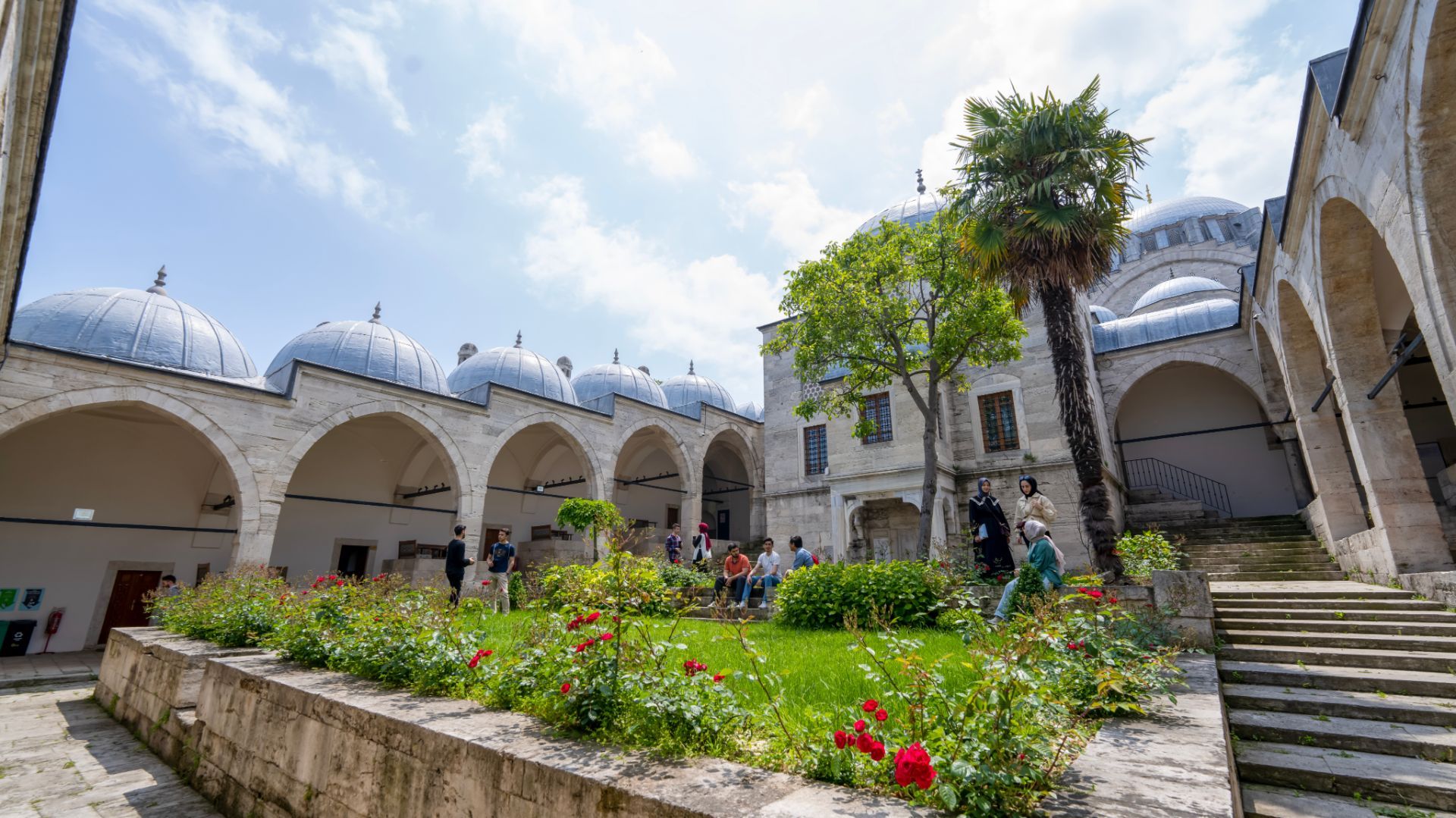
The training will be conducted in-person at the Ibn Haldun University Süleymaniye Campus.
Participants who successfully complete the training will be awarded a Certificate of Participation approved by the Ibn Haldun University Center for Continuing Education and Research (IHSEM). The certificate will specify the content of the training, total duration, and practical application modules.
The training will be conducted entirely in-person. In accordance with Article 32 of the Regulation on Mediation in Legal Disputes, training institutions are required to maintain attendance records for all participants. Participants who fail to attend more than 1/12 of the total course hours will be disenrolled from the program.
Program Fee
The registration fee is 16,000 Turkish Lira (TRY). Payment may be completed by credit card or bank transfer. Enrollment is finalized only upon receipt of full payment.
Total Duration: 40 hours
Enrollment Capacity
Enrollment is limited to 25 participants. Registrations are confirmed on a first-come, first-served basis in order of payment completion. Applicants on a waitlist will be directed to the next available cohort once capacity is reached.
Program Coordination
Organization: IHUSEM – Ibn Haldun University Center for Continuing Education and Research
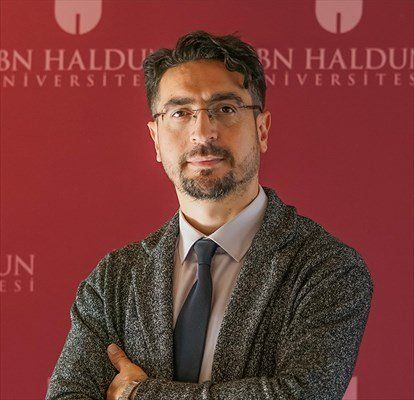
Training Coordinator: Asst. Prof. Dr. Adem YURDUNKULU
Formal Registration
Formal registration is completed upon successful processing of payment. Applicants who do not complete the payment process will not be considered registered participants.
Refund and Participation Policy
Due to limited enrollment capacity, refund requests from registered participants will not be accepted except in cases of documented emergency.
Attendance at a minimum of 80% of the total training hours is mandatory. Participants whose absence exceeds 20% of the program will not be eligible to receive a certificate of participation.
| DATE | DAY | HOURS | SESSION DURATION |
| 13 July 2026 | Monday | 09:00 – 17:00 | 8 hours |
| 14 July 2026 | Tuesday | 10:00 – 17:00 | 8 hours |
| 15 July 2026 | Wednesday | 10:00 – 17:00 | 8 hours |
| 16 July 2026 | Thursday | 10:00 – 17:00 | 8 hours |
| 17 July 2026 | Friday | 10:00 – 17:00 | 8 hours |
| 18 July 2026 | Saturday | 10:00 – 17:00 | Assignment (Article / Paper / Thesis) |
| 19 July 2026 | Sunday | 10:00 – 17:00 | Assignment (Article / Paper / Thesis) |
You can review the instructors who deliver this training program.